

Flood Engineering Assessments
Flood Smart Engineering provides flood engineering assessments for residential, commercial, industrial and subdivision developments throughout South East Queensland. We assist homeowners, builders, developers and consultants in understanding flood constraints, satisfying council planning requirements and maximising development opportunities.
What is a Flood Engineering Assessment?
A flood engineering assessment evaluates how flooding may affect an existing or proposed development and determines whether the development satisfies the applicable flood planning requirements of the relevant local authority.
These assessments are commonly required to support Development Applications (DA), Building Applications (BA) and other planning approvals where flood hazards or overland flow may influence the development potential of a property.
Every site presents different flooding characteristics and planning requirements. A flood engineering assessment considers factors such as flood levels, overland flow paths, flood hazards, flood immunity requirements and potential impacts on neighbouring properties to ensure an appropriate engineering solution can be developed.
At Flood Smart Engineering, our assessments are tailored to each individual project and provide practical recommendations that assist clients in obtaining council approval while maximising development opportunity.
When is a Flood Engineering Assessment Required?
Flood engineering assessments are commonly required where flooding or overland flow may affect a proposed development or where council planning schemes identify flood-related development constraints.
Assessments are regularly undertaken for:
New dwellings
House raises
Knockdown rebuilds
Home extensions
Duplexes and townhouses
Residential subdivisions
Commercial developments
Industrial warehouses and facilities
Childcare centres
Schools and community infrastructure
Even where an existing dwelling is located on a property, redevelopment, filling, alterations to floor levels or changes to the site's drainage characteristics may trigger flood assessment requirements.
Early identification of flood constraints often results in better engineering outcomes and can significantly reduce redesign costs later in the project.
Types of Flood Engineering Assessments
Every development has different requirements. Depending on the project, a flood engineering assessment may include one or more of the following specialised assessments.
-
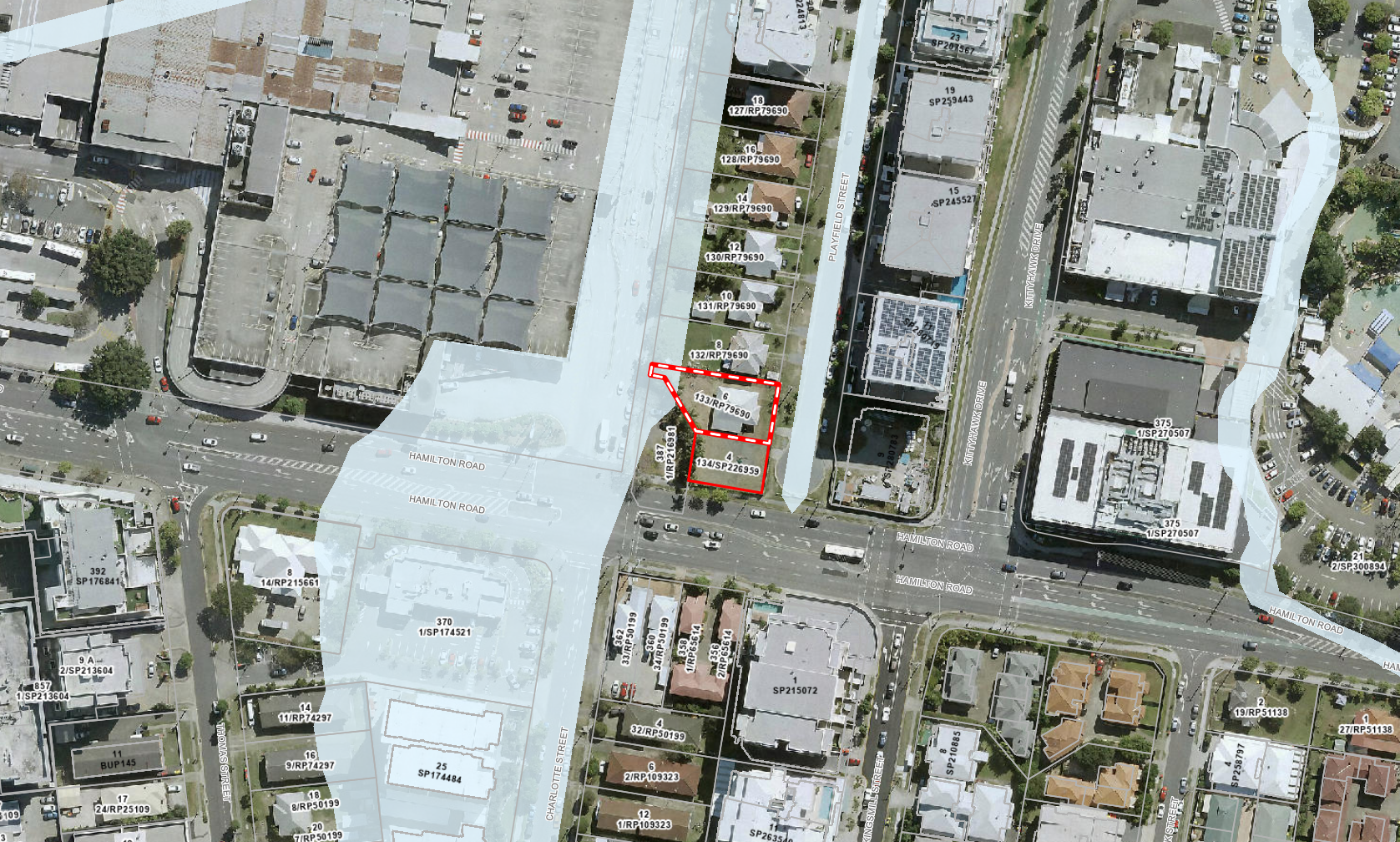
Flood Impact Assessments determine whether a proposed development will adversely affect neighbouring properties or alter existing flood behaviour. These assessments evaluate changes to flood levels, flood extents, velocities and overland flow characteristics to demonstrate compliance with council planning requirements.
-
Flood Immunity Assessments determine the minimum floor levels and development requirements necessary to ensure buildings remain protected during the applicable design flood event. These assessments commonly consider habitable floor levels, non-habitable floor levels, freeboard requirements and access arrangements.
-
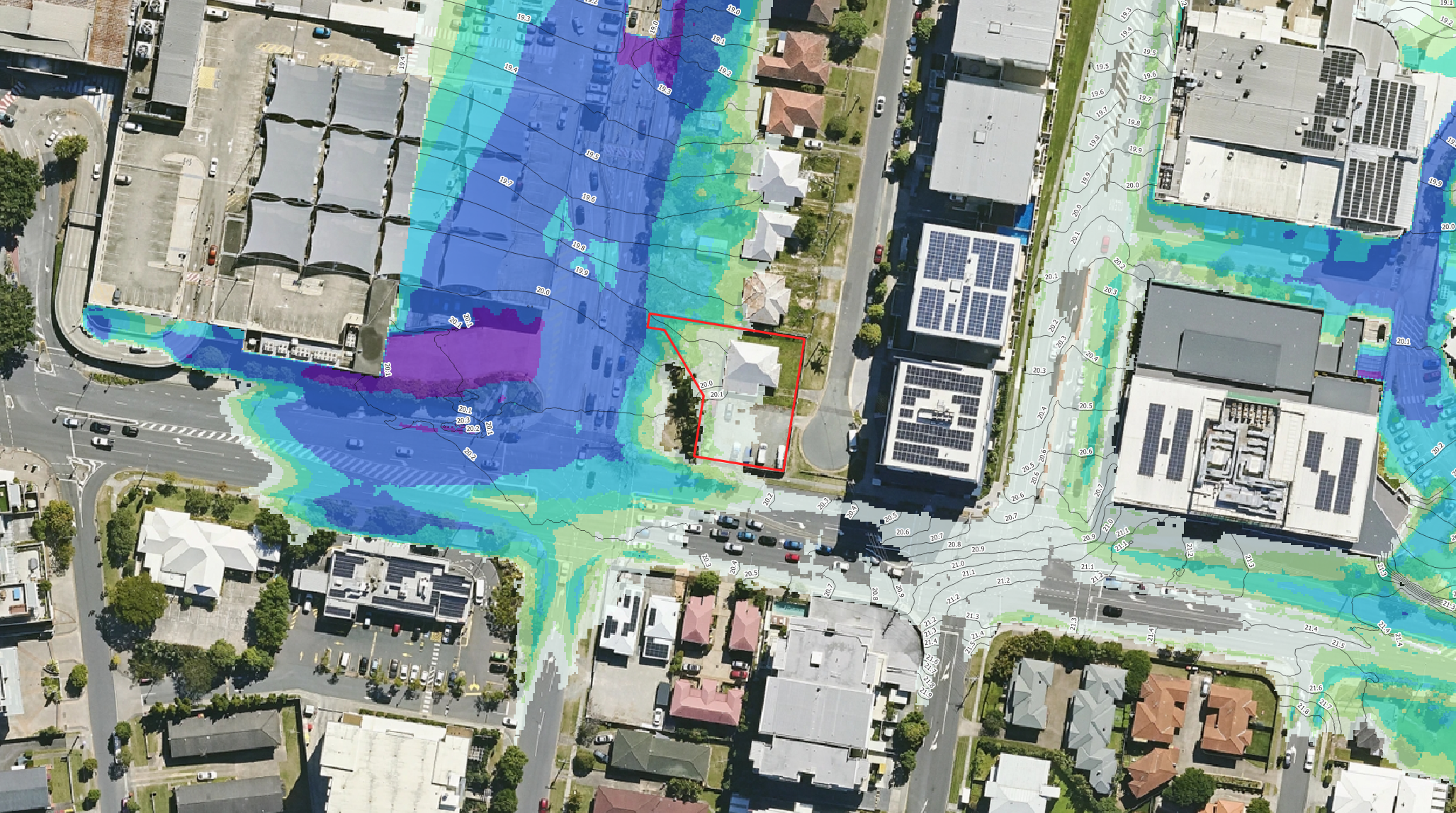
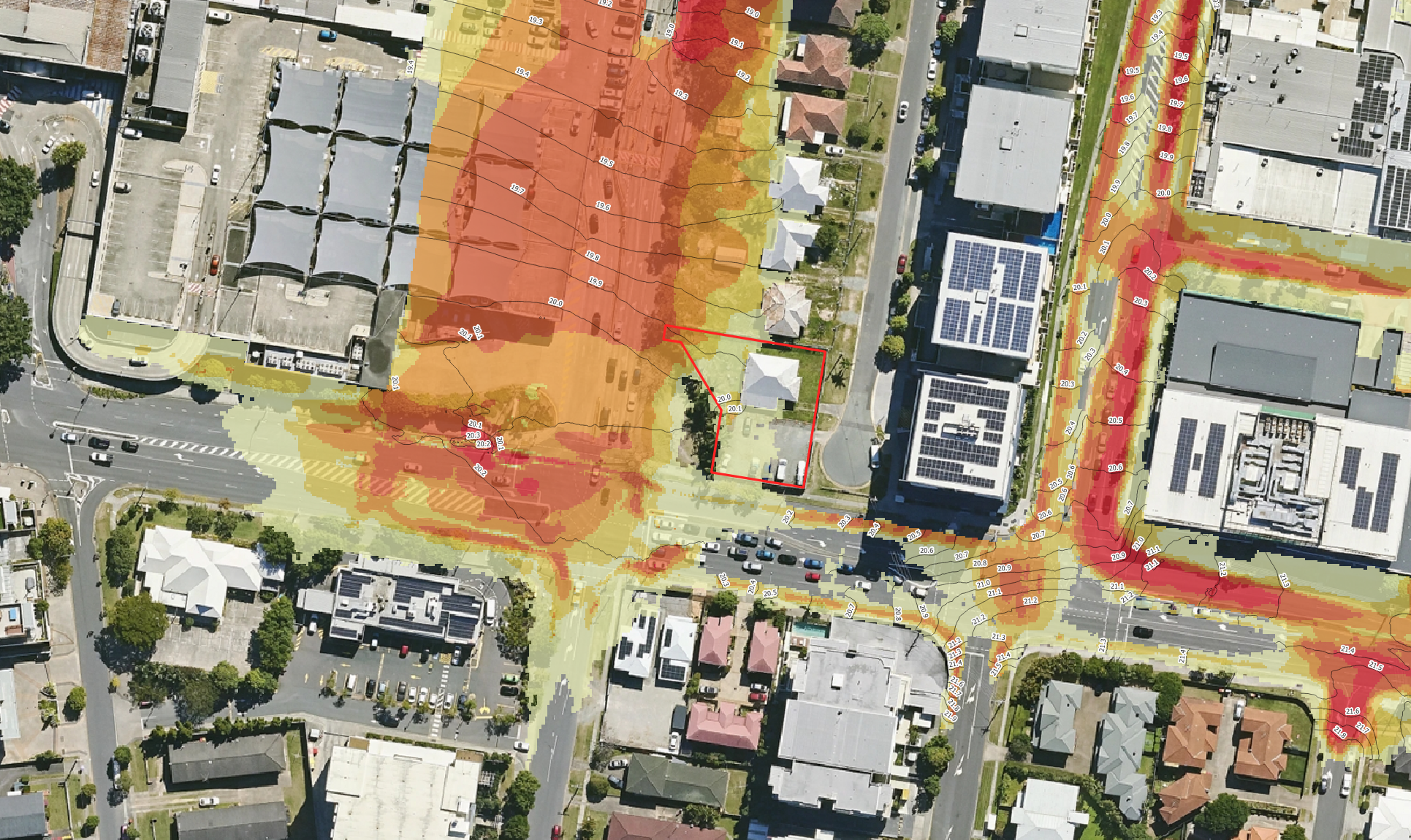
Overland Flow Assessments investigate how runoff travels across a property during storm events. Where council flood information is unavailable or insufficient, hydraulic modelling is undertaken to determine flood levels, depths, velocities, hazards and overland flow paths.
-
Flood Risk Assessments evaluate the potential risks flooding presents to people, property and infrastructure. These assessments may consider flood warning times, evacuation capability, flood hazards and emergency management considerations.
-
Hydraulic modelling is frequently undertaken as part of flood engineering assessments to simulate flood behaviour across a site. Using TUFLOW hydraulic models, Flood Smart Engineering can determine site-specific flood levels, depths, velocities, hazards and flood extents to support engineering design and council approval.
What Does a Flood Engineering Assessment Include?
Every assessment is tailored to suit the individual site and proposed development. Depending on the project requirements, a flood engineering assessment may include:
Review of council flood mapping
Review of applicable planning scheme requirements
Site survey review
Existing flood information assessment
Flood Impact Assessment
Flood Immunity Assessment
Overland Flow Assessment
Hydraulic Modelling (where required)
Minimum floor level determination
Flood hazard assessment
Engineering recommendations
Preparation of a comprehensive engineering report for council submission
Our objective is to provide practical engineering advice that assists clients in progressing their projects efficiently while satisfying council flood planning requirements.
Our Assessment Process
Step 1
We review the property location, proposed development and applicable council planning requirements.
Property & Development Review
Step 2
Available flood mapping, flood studies, survey information and historical flood data are reviewed.
Existing Flood Information Review
Step 3
Where required, hydraulic modelling is undertaken to assess flood levels, overland flow paths, flood hazards and development impacts.
Engineering Assessment
Step 4
Suitable engineering solutions are developed to improve flood performance while satisfying planning requirements.
Engineering Recommendations
Step 5
A comprehensive flood engineering report is prepared to support the relevant Development Application or Building Application.
Engineering Report Preparation
Step 6
Where required, we assist clients by responding to council requests and providing additional engineering information throughout the approval process.
Council Approval
Councils We Regularly Work In
Our experience across multiple council areas provides a detailed understanding of local flood mapping, planning scheme requirements and development constraints, allowing us to tailor engineering solutions to each council's specific requirements.
Flood Smart Engineering provides flood engineering assessments throughout South East Queensland, including:

Frequently Asked Questions
-
If your property is affected by flooding, overland flow or a flood overlay, a flood engineering assessment may be required to support a Development Application (DA) or Building Application (BA). Requirements vary between councils and developments. We can review your property and proposed development to determine whether a flood engineering assessment is required.
-
A flood engineering assessment is the engineering process used to evaluate flooding, assess development impacts and determine compliance with council planning requirements. The flood report is the engineering document produced from this assessment and submitted to council as part of a Development Application (DA) or Building Application (BA).
-
The cost of a flood engineering assessment depends on several factors, including the size of the site, the flooding source, the complexity of the project and the council requirements. Following a review of your property and proposed development, we can provide a tailored proposal outlining the required scope of works and associated costs.
-
Not every project requires hydraulic modelling. Where council information is insufficient or site-specific flood behaviour must be assessed, hydraulic modelling is commonly undertaken to determine flood levels, depths, velocities and hazards.
-
Many developments can still proceed within flood overlays provided the applicable planning scheme requirements are satisfied. Appropriate engineering assessment is often required to demonstrate compliance.
-
Not every project requires hydraulic modelling. However, where detailed flood behaviour or overland flow characteristics need to be assessed, hydraulic modelling is commonly undertaken to determine flood levels, depths, velocities, hazards and potential flood impacts. Following an initial review of your project, we can advise whether hydraulic modelling is necessary.